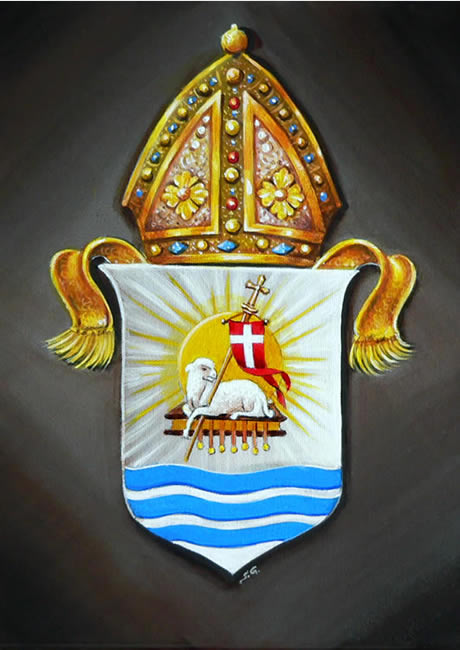
Article I — The Catholic Church of America
Chapter 1: Name and Jurisdiction
Canon I-1: The official name of this Church shall be the Catholic Church of America, formerly known as the Old Roman Catholic Church, Diocese of San Diego.
Canon I-2: This Church is independent and autocephalous, with jurisdiction coinciding with worldwide boundaries and including all U.S. territories and military facilities.
Chapter 2: Identity and Mission
Canon I-3: The Church is a continuation of the One, Holy, Catholic, and Apostolic Church founded by Jesus Christ and sustained through apostolic succession.
Canon I-4: Its mission is to proclaim the Gospel, administer the sacraments, and serve the people of God through worship, education, and pastoral care.
Chapter 3: Authority and Governance
Canon I-5: The Church shall be governed by its Constitution and Canons, interpreted by the National Synod and enforced by the Presiding Bishop.
Canon I-6: All clergy and laity are subject to the authority of this Constitution and its governing bodies.
Article II — Beliefs and Principles
Chapter 1: Core Doctrines
Canon II-1: The Catholic Church of America professes the Nicene Creed as the foundational statement of faith.
Canon II-2: The Church affirms the seven sacraments as instituted by Christ and upheld by apostolic tradition.
Canon II-3: Scripture, tradition, and reason form the threefold source of theological understanding and moral guidance.
Chapter 2: Apostolic Succession
Canon II-4: The Church maintains apostolic succession through valid episcopal consecrations recognized by historic Catholic jurisdictions.
Canon II-5: All clergy must be ordained within this apostolic lineage to exercise sacramental authority.
Chapter 3: Ecumenical Relations
Canon II-6: The Church seeks unity with other Christian communities through dialogue, mutual respect, and shared ministry where appropriate.
Canon II-7: Ecumenical cooperation shall not compromise the doctrinal integrity or sacramental discipline of the Church.
Article III — Liturgy and Sacraments
Chapter 1: Liturgical Worship
Canon III-1: The Church shall celebrate the liturgy in accordance with historic Catholic tradition, using approved rites and texts.
Canon III-2: Liturgical seasons, feasts, and fasts shall be observed as prescribed by the Church calendar.
Canon III-3: The Eucharist shall be celebrated regularly and be central to the Church's worship life.
Chapter 2: The Seven Sacraments
Canon III-4: The Church recognizes Baptism, Eucharist, Confirmation, Reconciliation, Anointing of the Sick, Holy Orders, and Matrimony as the seven sacraments instituted by Christ.
Canon III-5: Sacraments shall be administered by validly ordained clergy, except in cases of emergency where laypersons may baptize.
Canon III-6: Sacramental preparation and catechesis shall be provided to all candidates and their families.
Chapter 3: Sacramental Discipline
Canon III-7: Sacraments shall not be denied to any baptized person who seeks them in good faith and meets the requirements of the Church.
Canon III-8: Clergy shall maintain sacramental records and ensure reverent administration of all rites.
Article IV — National Governing Bodies
Chapter 1: The National Synod
Canon IV-1: The National Synod is the highest legislative and doctrinal authority of the Church, composed of bishops, clergy, and lay representatives.
Canon IV-2: The Synod shall convene at least once every three years to deliberate on matters of faith, governance, and discipline.
Canon IV-3: Decisions of the Synod shall be binding upon all jurisdictions and members of the Church.
Chapter 2: The Presiding Bishop
Canon IV-4: The Presiding Bishop shall serve as the chief executive and spiritual leader of the Church.
Canon IV-5: The Presiding Bishop shall be elected by the National Synod and serve a term as defined by canon law.
Canon IV-6: Duties include overseeing dioceses, representing the Church in ecumenical relations, and ensuring fidelity to doctrine and discipline.
Chapter 3: National Council
Canon IV-7: The National Council shall assist the Presiding Bishop in administrative and pastoral matters.
Canon IV-8: Members shall be appointed by the Presiding Bishop and confirmed by the Synod.
Canon IV-9: The Council shall meet regularly and report its activities to the Synod.
Article V — Church Organization
Chapter 1: Dioceses
Canon V-1: The Church shall be organized into dioceses, each led by a bishop with jurisdiction over clergy, parishes, and missions within the diocese.
Canon V-2: Dioceses shall be established, modified, or dissolved by the National Synod upon recommendation of the Presiding Bishop.
Chapter 2: Parishes and Missions
Canon V-3: Parishes are local congregations led by a priest and governed in accordance with canon law and diocesan guidelines.
Canon V-4: Missions may be established to serve communities without a formal parish structure and shall be overseen by diocesan clergy.
Canon V-5: All parishes and missions shall maintain sacramental records, financial accountability, and pastoral outreach.
Chapter 3: Institutions and Ministries
Canon V-6: The Church may establish educational, charitable, and pastoral institutions to fulfill its mission.
Canon V-7: Ministries such as youth programs, chaplaincies, and outreach services shall operate under diocesan supervision and canonical oversight.
Article VI — Clergy
Chapter 1: Ordination
Canon VI-1: Ordination to the diaconate, priesthood, and episcopate shall be conferred by a bishop in apostolic succession, following proper discernment and formation.
Canon VI-2: Candidates must demonstrate theological competence, moral integrity, and pastoral readiness before receiving Holy Orders.
Canon VI-3: The Church shall provide formal education and spiritual formation for all candidates for ordination.
Chapter 2: Clerical Duties
Canon VI-4: Clergy shall preach the Gospel, administer the sacraments, and provide pastoral care to the faithful.
Canon VI-5: Clergy are expected to maintain personal holiness, professional conduct, and accountability to their bishop and community.
Canon VI-6: Clergy shall participate in continuing education and spiritual renewal throughout their ministry.
Chapter 3: Discipline and Accountability
Canon VI-7: Clergy shall be subject to canonical discipline for violations of doctrine, ethics, or pastoral responsibility.
Canon VI-8: A formal process of investigation, adjudication, and appeal shall be available for all disciplinary matters.
Canon VI-9: The Church shall provide support and restoration for clergy in times of personal crisis or vocational transition.
Article VII — Religious Orders
Chapter 1: Recognition and Establishment
Canon VII-1: Religious orders may be recognized by the Church upon approval of the National Synod and the Presiding Bishop.
Canon VII-2: Each order shall have a defined charism, rule of life, and spiritual mission consistent with Catholic tradition.
Canon VII-3: New orders must submit a constitution and leadership structure for ecclesiastical review and approval.
Chapter 2: Governance and Accountability
Canon VII-4: Religious orders shall be governed internally by their own superiors, under the oversight of the diocesan bishop and the Presiding Bishop.
Canon VII-5: Orders shall maintain transparency in finances, membership, and ministry activities.
Canon VII-6: Members of religious orders remain subject to the Constitution and Canons of the Church.
Chapter 3: Vows and Formation
Canon VII-7: Members may profess temporary or perpetual vows of poverty, chastity, and obedience, according to the rule of their order.
Canon VII-8: Proper spiritual, theological, and pastoral formation shall be provided to all candidates before profession of vows.
Canon VII-9: The Church shall support religious orders in their vocation and ministry through prayer, collaboration, and pastoral care.
Article VIII — Laity
Chapter 1: Role and Vocation
Canon VIII-1: The laity are full members of the Church, called to live out their baptismal vocation through worship, service, and witness.
Canon VIII-2: Laypersons shall participate actively in the life of the Church, including liturgy, education, and pastoral ministry.
Canon VIII-3: The Church shall support the spiritual growth and theological formation of all lay members.
Chapter 2: Rights and Responsibilities
Canon VIII-4: Lay members have the right to pastoral care, access to the sacraments, and participation in Church governance through elected representation.
Canon VIII-5: Laypersons shall uphold the teachings of the Church and contribute to its mission through stewardship and service.
Canon VIII-6: The Church shall foster lay leadership and recognize the diverse gifts of the faithful.
Chapter 3: Lay Organizations
Canon VIII-7: Lay associations and ministries may be formed to promote spiritual, educational, and charitable work, subject to diocesan approval.
Canon VIII-8: All lay organizations shall operate in harmony with the Constitution and Canons of the Church.
Canon VIII-9: The Church shall encourage collaboration between clergy and laity in all aspects of ecclesial life.
Article IX — Church Administration
Chapter 1: Financial Stewardship
Canon IX-1: The Church shall maintain transparent and accountable financial practices at all levels of governance.
Canon IX-2: Parishes, missions, and dioceses shall prepare annual budgets and submit financial reports to their respective authorities.
Canon IX-3: All funds shall be used to support the mission of the Church, including worship, education, outreach, and clergy support.
Chapter 2: Records and Archives
Canon IX-4: The Church shall maintain accurate records of baptisms, confirmations, marriages, ordinations, and other sacramental acts.
Canon IX-5: Dioceses shall preserve historical documents and archives in secure and accessible formats.
Canon IX-6: Confidentiality shall be respected in all personal and pastoral records, in accordance with canonical and civil law.
Chapter 3: Administrative Oversight
Canon IX-7: The Presiding Bishop and National Council shall oversee administrative policies and ensure compliance with canonical standards.
Canon IX-8: Audits and reviews may be conducted to ensure integrity and accountability in Church operations.
Canon IX-9: The Church shall provide training and resources for administrators, treasurers, and record-keepers.
Article X — Enactment and Implementation
Chapter 1: Adoption of the Constitution
Canon X-1: This Constitution and Canons shall be adopted by the National Synod and take effect upon ratification by a two-thirds majority vote.
Canon X-2: Upon adoption, all previous governing documents inconsistent with this Constitution shall be null and void.
Chapter 2: Amendments
Canon X-3: Amendments to this Constitution may be proposed by any member of the Synod and must be reviewed by the Presiding Bishop and National Council.
Canon X-4: Amendments shall be adopted by a two-thirds majority vote of the National Synod and take effect immediately unless otherwise specified.
Chapter 3: Interpretation and Enforcement
Canon X-5: The Presiding Bishop shall be the chief interpreter of this Constitution, with authority to issue binding rulings subject to Synod review.
Canon X-6: All members of the Church are bound to uphold the Constitution and Canons in spirit and practice.
Canon X-7: Disputes regarding interpretation shall be resolved through canonical procedures established by the Synod.